
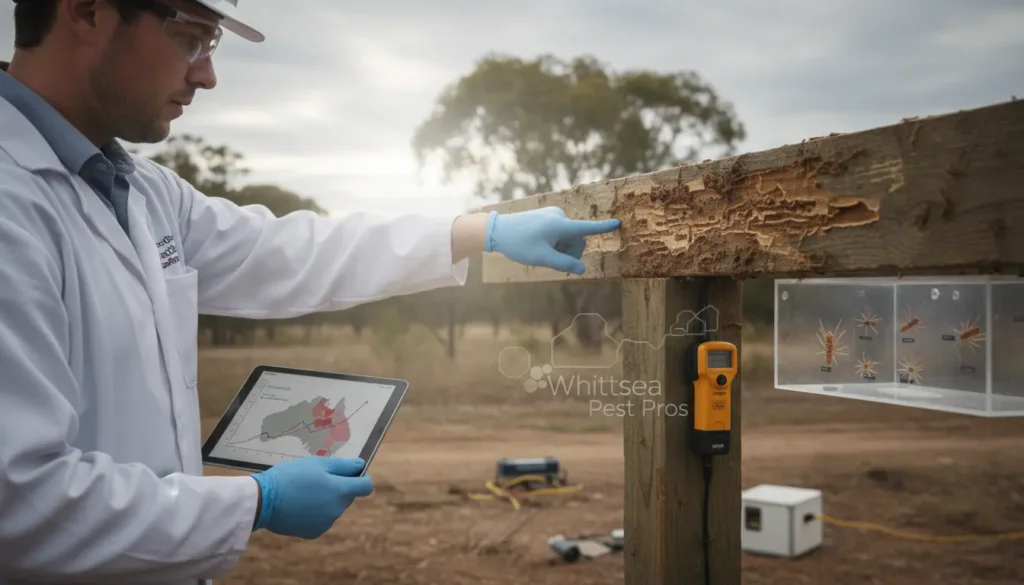
Termites are silent invaders that can devastate homes and businesses across Victoria, and with the state’s climate warming, their threat is growing more urgent. In Whittlesea, where we’ve serviced countless properties at Whittlesea Pest Pros, we’ve noticed a spike in termite infestations linked to prolonged dry spells followed by heavy rains—conditions that termites thrive in. Homeowners often underestimate how these environmental shifts make structures more vulnerable, leading to costly repairs that could have been prevented. This post breaks down the evolving risks and equips you with the knowledge to protect your investment. By understanding termite behaviour in our changing climate, you can take proactive steps to keep your home safe and secure.
How Victoria’s Changing Climate is Amplifying Termite Threats
Victoria’s climate has been undergoing noticeable changes, with rising temperatures, erratic rainfall, and more frequent extreme weather events creating ideal conditions for termites. These subterranean pests, which feed on cellulose in wood, are highly sensitive to environmental factors. Warmer soils—now averaging 1-2 degrees higher than two decades ago—accelerate their metabolic rates, allowing colonies to expand faster and forage further from nests. In regions like Whittlesea, where bushland meets suburban development, this means termites are encroaching on more homes than ever.
To grasp the ‘what’ and ‘why’, consider the biology: Termites require moisture to survive, but they don’t need standing water. Instead, they exploit microclimates around buildings, such as damp garden beds or leaking pipes. Climate models from the Bureau of Meteorology predict drier winters and hotter summers for Victoria, which paradoxically boosts termite activity. During dry periods, termites tunnel deeper for moisture, potentially damaging foundations undetected. Then, summer storms provide the humidity they crave, triggering swarming and new colony formations.
Here’s a breakdown of key impacts:
- Temperature Rise: Optimal termite activity occurs between 20-30°C; Victoria’s average has crept into this range more often, shortening their dormant phases and increasing feeding cycles by up to 30%.
- Rainfall Variability: Irregular patterns lead to soil moisture fluctuations. In Whittlesea’s clay-rich soils, this creates pathways for termites to access homes via cracks.
- Urban Heat Islands: Melbourne’s sprawl, including suburbs like Reservoir, traps heat, mimicking tropical conditions that favour species like Coptotermes acinaciformis, Victoria’s most destructive termite.
- Vegetation Changes: Warmer conditions promote eucalypt dieback, providing more dead wood for termite food sources near properties.
In our experience at Whittlesea Pest Pros, we’ve treated over 200 termite cases in the past year alone, many in homes built on former farmland where soil disturbances exacerbate risks. Technical terms like ‘subterranean termites’ simply refer to those that live underground and build mud tubes to reach food—tubes you might spot as thin, soil-covered lines on walls. Drywood termites, less common here, infest without soil contact but are on the rise with imported timber. Understanding these helps demystify inspections: we look for frass (termite droppings resembling sawdust) or hollow-sounding timber.
This climate-driven surge isn’t just theoretical; CSIRO reports indicate a 15-20% increase in termite distribution southward in Australia over the last decade. For Whittlesea residents, with its mix of weatherboard homes and brick veneer, the stakes are high—untreated infestations can cost $10,000-$30,000 in structural repairs. By recognising these patterns, you’re better positioned to act before damage escalates.
Practical Strategies to Protect Your Property from Termite Risks
Armed with knowledge of the risks, let’s move to actionable steps tailored to Victoria’s evolving climate. In Whittlesea, local factors like the area’s proximity to the Yarra Valley’s humid zones and variable rainfall mean prevention must be year-round, not seasonal. Start with a professional inspection—essential for early detection—but you can bolster defences at home.
First, manage moisture around your property. Termites are drawn to damp areas, so ensure gutters are clear and downpipes direct water away from foundations. In Whittlesea’s sandy-loam soils, which retain water unevenly, install French drains if your yard slopes poorly. Regularly trim vegetation at least 50cm from walls to reduce shade and humidity buildup.
Soil treatment is a cornerstone: Apply a registered termiticide barrier around your home’s perimeter. For DIY enthusiasts, products like bifenthrin-based liquids create a chemical moat, but reapply every 3-5 years as climate shifts can degrade them faster. In hotter years, evaporation rates increase, shortening efficacy.
Upgrade your home’s vulnerabilities:
- Timber Protection: Use naturally resistant hardwoods like blackbutt for outdoor structures, or treat exposed pine with borate solutions.
- Physical Barriers: Install stainless steel mesh under slabs during renovations—mandatory in new Victorian builds under the Building Code of Australia.
- Monitoring Stations: Place bait systems in the ground; these use slow-acting toxins to eliminate colonies without widespread chemicals.
Local regulations in Whittlesea require licensed applicators for treatments, so consult pros for compliance. Housing types here—many post-war fibro homes—are prone to termite entry via weep holes, so seal these with fine mesh.
Pro Tip: In Victoria’s changing climate, check for termite mud tubes after heavy rains, as flooding can wash away barriers. An insider secret from our team: Use thermal imaging during inspections; it detects hidden nests by spotting temperature anomalies in walls, a method we’ve refined for Diggers Rest properties where soil variations hide activity.
For businesses, especially in North Warrandyte with its rural edges, integrate pest management into maintenance schedules. We’ve seen warehouses lose inventory to termites via stored pallets—opt for treated timber. These steps, combined with annual checks, can reduce infestation risks by 70%, per industry standards. Remember, while DIY helps, our about us page details how Whittlesea Pest Pros customises plans for local conditions.
Common Mistakes Homeowners Make in Termite Prevention
Many Whittlesea residents underestimate termite risks, leading to overlooked vulnerabilities that climate change worsens. A frequent error is ignoring routine inspections; with warmer weather extending termite seasons, skipping yearly checks allows colonies to establish undetected. This can result in $20,000+ in damages, as structural beams weaken silently.
Another pitfall: Relying solely on surface treatments without addressing moisture sources. In our humid summers, untreated leaks create termite highways—homeowners patch walls but miss the root cause, inviting reinfestation. Financially, this means repeated treatments; safety-wise, compromised foundations risk collapses during storms.
DIY chemical applications often go wrong too. Over-the-counter products may not penetrate Victoria’s variable soils properly, especially in clay-heavy Preston areas, leading to incomplete barriers. Improper mixing can harm pets or gardens, and without certification, you void insurance claims.
Neglecting surrounding landscapes is common: Mulch beds close to homes retain moisture, amplified by erratic rains, drawing termites. We’ve encountered cases where unmaintained trees drop debris, providing food sources—resulting in costly arborist and pest bills.
Finally, assuming new homes are immune. Even modern builds in Heathcote can have construction flaws like unfilled voids. Climate shifts make these errors costlier, as faster termite reproduction outpaces delayed responses. Avoid these by prioritising professional advice over quick fixes.
Key Takeaways and Next Steps
Victoria’s changing climate is undeniably escalating termite risks, from warmer soils speeding colony growth to variable weather creating perfect breeding grounds. In Whittlesea, proactive measures like moisture control, barriers, and regular inspections are essential to protect your home or business. By avoiding common mistakes such as skipping checks or improper treatments, you can save thousands and ensure long-term safety.
At Whittlesea Pest Pros, we’ve built our reputation on helping locals navigate these challenges with tailored, eco-friendly solutions. If you’d rather leave it to experts, our team delivers thorough assessments and treatments suited to our local environment. For peace of mind, visit our homepage to learn more about our services. Need help with termite risks in Victoria’s changing climate in Whittlesea? Call Whittlesea Pest Pros today at 0370539826.
Leave a Reply